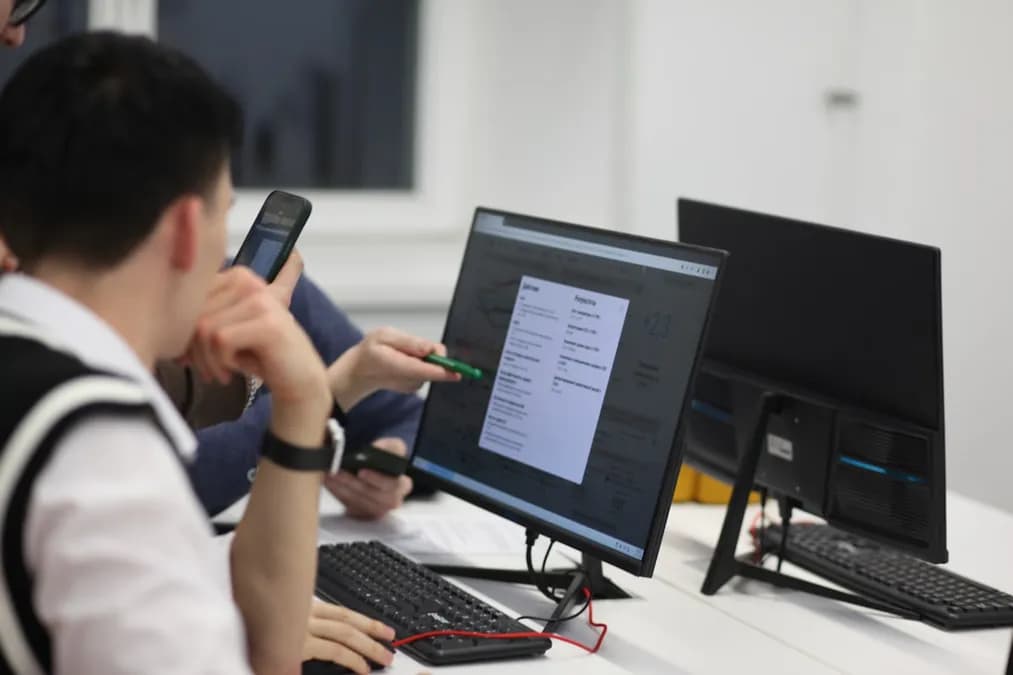
How STADLER is Revolutionizing Intellectual Work with ChatGPT for 650 Employees
The century-old company STADLER integrates ChatGPT to transform the work of its 650 employees, reducing task times and accelerating productivity. A pioneering initiative in the digitalization of business processes.
STADLER Energizes Intellectual Work Thanks to ChatGPT
STADLER, a Swiss company with 230 years of history, has taken a major step by integrating ChatGPT into its daily operations. This adoption, deployed across its 650 employees, aims to lighten knowledge tasks and accelerate overall productivity. The initiative illustrates how a historic industrial structure can reinvent itself through artificial intelligence.
The choice of ChatGPT, developed by OpenAI, is part of a strategy to modernize internal processes, particularly those related to document management, report writing, and information research. The tool has been adapted to STADLER's specific needs, promoting smoother and more collaborative work.
Specifically, the use of ChatGPT allows STADLER employees to significantly reduce the time spent on repetitive or low value-added tasks. For example, automated generation of technical documents and rapid synthesis of complex information have become key functions. This automation accelerates work cycles while improving the accuracy of deliverables.
Before integrating ChatGPT, employees spent several hours collecting and organizing data. Now, they can focus on high-expertise activities, delegating information management to AI. This evolution is accompanied by a tangible reduction in stress and better job satisfaction, according to internal feedback.
This transformation takes place in a context where digitalization of knowledge professions becomes an essential strategic lever, especially facing global competition and growing innovation demands.
Architecture and Technical Innovations Behind the Integration
Technically, STADLER opted for a customized integration of ChatGPT via the OpenAI API, allowing smooth interaction with existing internal systems. The language model was refined to understand the industrial jargon specific to STADLER, thus ensuring adapted and relevant responses.
This adaptation is based on additional training with proprietary data, without compromising confidentiality. The hybrid approach combines artificial intelligence and human supervision to ensure reliability and compliance. This innovative technical framework illustrates the maturity of AI tools in complex professional environments.
Accessibility and Deployment for Teams
Access to ChatGPT is offered via an ergonomic interface, accessible on desktop and mobile devices. This flexibility encourages rapid adoption and daily use, whether in the office, workshop, or on the move. STADLER also implemented specific training to support its employees in this digital transition.
The business model relies on a SaaS subscription adapted to the company's size, with dedicated technical support. This formula guarantees progressive scaling and continuous evolution of features according to business needs.
Impact on the Industrial Sector and Knowledge Professions
STADLER is among the pioneers to industrialize the use of ChatGPT on a large scale in a century-old company. This approach could inspire other industrial players in Europe seeking to modernize their processes without disrupting their DNA.
The use of generative AI opens new perspectives in knowledge management, a major challenge for companies facing increased project complexity and the need for agility. In a competitive European context, this advancement positions STADLER as an example of successful transformation.
Critical Analysis and Perspectives
While the integration of ChatGPT at STADLER marks a notable advance, it should be noted that optimization strongly depends on the quality of internal data and user adoption. Human supervision remains essential to avoid biases or errors in automated outputs.
In the medium term, the evolution of AI models and their integration into ERPs could further strengthen these productivity gains. For STADLER, the next step will be to expand use cases and precisely measure economic impact, information not confirmed at this stage. Nevertheless, this initiative illustrates a strong trend toward widespread AI adoption in French and European companies, a movement expected to accelerate in the coming years.
A Transformation Rooted in a Rich Historical Heritage
Founded 230 years ago, STADLER has an industrial heritage deeply rooted in Swiss tradition. This longevity testifies to an ability to adapt to major economic and technological changes. Integrating ChatGPT is not only a technological innovation act but also a continuation of this corporate culture focused on excellence and quality. STADLER's digital transformation thus takes place in a context where preserving its identity involves adopting the most advanced tools to remain competitive in the global market.
This approach also illustrates the desire to satisfy demanding partners and clients by offering more responsive and precise solutions. The company shows that longevity and modernity can coexist, serving as an example to other century-old industrial companies facing the need for renewal.
Tactical and Organizational Challenges of Deployment
The integration of ChatGPT at STADLER was not a simple technological adoption but a real organizational challenge. Certain processes had to be rethought to effectively integrate the tool without disrupting production lines and existing workflows. The major tactical challenge was to maintain a balance between automation and human control to guarantee the quality of results.
Moreover, employee training played a key role in ensuring optimal adoption. The company implemented targeted workshops and continuous support to overcome barriers related to novelty and fear of replacement. This strategy fostered harmonious human-machine collaboration, maximizing AI benefits while valuing human expertise.
Evolution Perspectives and Future Positioning
Looking ahead, STADLER plans to extend the use of ChatGPT to even more strategic areas, notably supply chain management and maintenance process optimization. AI integration in these sectors could anticipate needs, reduce costs, and improve service quality.
Additionally, collaboration with OpenAI to continuously refine the model according to industrial specificities suggests increased customization of AI tools. This trajectory places STADLER as a leader in digitalizing knowledge professions within industry, with significant potential influence on European practices.
In Summary
STADLER illustrates how a century-old industrial company can leverage artificial intelligence to profoundly transform its intellectual work. By integrating ChatGPT on a large scale, it optimizes productivity, improves deliverable quality, and enhances employee expertise. This initiative, driven by an innovative technical approach and a strong human dimension, paves the way for a new era of knowledge management in industry. While remaining faithful to its rich heritage, STADLER thus prepares its future in a demanding and constantly evolving competitive context.