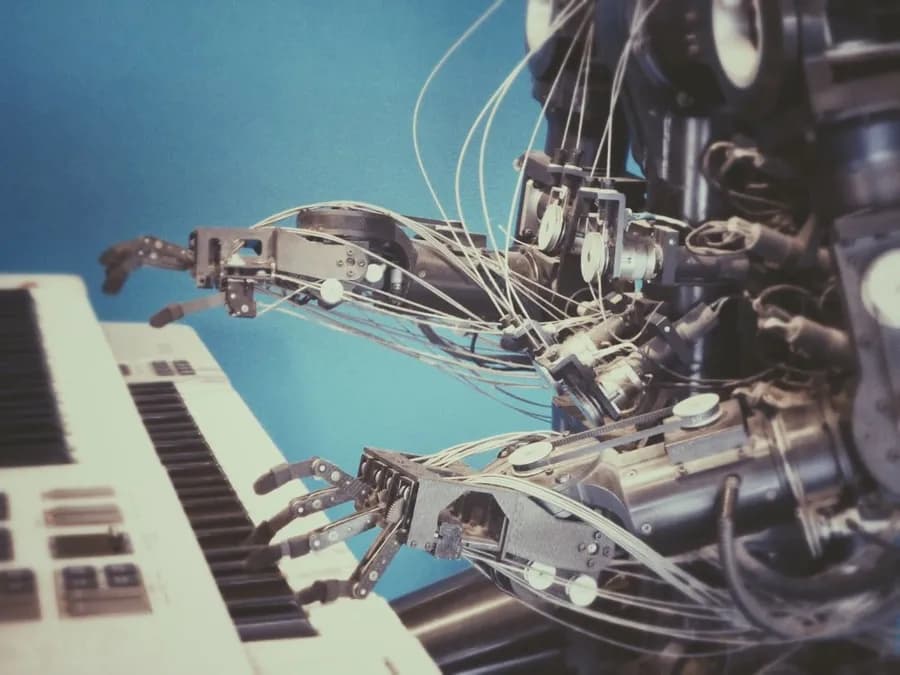
Gemini Robotics: DeepMind Integrates AI Directly into the Physical World of Robots
DeepMind unveils Gemini Robotics, a series of AI models designed to enable robots to understand and act within their real environment. This breakthrough marks a key step towards more autonomous and adaptive robots.
Google DeepMind has introduced Gemini Robotics and Gemini Robotics-ER, two artificial intelligence models specifically developed for robots. These systems enable machines not only to perceive their physical environment but also to interact with it autonomously and responsively.
This innovation aims to bridge the gap between purely software-based artificial intelligence and the demands of the real world, paving the way for robots capable of adapting and performing complex tasks in dynamic environments.
Gemini Robotics is based on advanced deep learning architectures optimized for sensory understanding and real-time decision-making. The Gemini Robotics-ER model stands out for its ability to integrate physical feedback, thereby improving the robots' accuracy and responsiveness.
These technologies are designed to be versatile, applicable to a wide range of robots, from industrial machines to mobile assistants. DeepMind emphasizes that these models enable better coordination between perception, planning, and action, essential for safe and effective interactions in the physical world.
Unconfirmed information at this stage: exact technical details about the underlying algorithms or concrete application scenarios remain to be specified.
Why It Matters
This initiative is a major breakthrough in intelligent robotics because it addresses the fundamental challenge of moving AI beyond the virtual realm so it can operate in real-world contexts. Until now, most AI progress was confined to digital or highly controlled domains.
With Gemini Robotics, DeepMind is paving the way for robots capable of adapting in real time to unpredictable situations, which is crucial for sectors such as logistics, healthcare, or industrial maintenance. This could transform many industries by automating tasks requiring flexibility and judgment.
Industry Reaction
This announcement has sparked keen interest in the scientific and industrial communities, which see Gemini Robotics as having the potential to accelerate the deployment of reliable intelligent robots. Experts praise the ability to integrate AI into physical control, a step long considered a bottleneck.
Robotics stakeholders in Europe and France are closely monitoring this advancement, aware that developing similar models is a key factor in maintaining competitiveness in a rapidly evolving sector.
Historical Context of AI Integration in Robotics
The integration of artificial intelligence into robotics is not new, but it has long been limited by technical constraints and insufficient understanding of complex physical environments. For decades, robots operated in strictly controlled spaces, such as industrial assembly lines, where variables are predictable and tasks repetitive.
Early attempts to combine AI and robotics mainly aimed to improve machine programming and flexibility but often lacked real-time responsiveness to unforeseen situations. With the advent of deep neural networks and increased computing power, robotics began a transformation, enabling better sensory perception and faster decision-making.
Gemini Robotics now represents a key milestone in this evolution, combining advanced machine learning and direct physical interaction. This initiative illustrates the gradual maturation of research in cognitive robotics, which aims to make robots truly autonomous and adaptive.
Tactical Issues and Technological Challenges
From a tactical perspective, Gemini Robotics must overcome several major challenges to succeed in integration within varied operational environments. Real-time understanding and interpretation of sensory data are essential to allow robots to navigate and interact without errors, even in the presence of unexpected obstacles or sudden changes in the environment.
Another challenge is managing physical feedback, which Gemini Robotics-ER specifically addresses. This ability to learn from its own actions in the real world allows continuous improvement of robot performance, a crucial feature for applications where precision and reliability are non-negotiable.
The models must also ensure smooth coordination between perception, planning, and action, as any delay in this process could lead to potentially dangerous errors. The challenge is even greater because these systems must operate on different types of robots and in very diverse contexts, requiring high software and hardware adaptability.
Outlook and Potential Impact
The future of Gemini Robotics looks promising, notably thanks to its versatile approach that can find applications in many industrial and commercial sectors. In logistics, for example, these robots could automate warehouse management by adapting to changing goods flows and unforeseen events, thus improving overall efficiency.
In healthcare, adaptation and physical interaction capabilities could open the way to robotic assistants able to help caregivers or support patients in their daily movements and care. Similarly, in industrial maintenance, these systems could operate on complex machines with increased autonomy, reducing risks and costs associated with human interventions.
DeepMind plans to intensify collaborations with industrial partners to test these models in real environments, which will help validate their effectiveness and identify necessary improvements. These experiments should also contribute to better understanding the current limits of the technology and guide future research.
Next Steps
DeepMind intends to continue refining these models and collaborating with industrial partners to test Gemini Robotics in real-world applications. More detailed demonstrations and specific use cases are expected to be presented in the coming months, providing better visibility on the concrete impact of these technologies.
In Summary
Gemini Robotics and Gemini Robotics-ER represent a new generation of AI models designed to equip robots with intelligent and autonomous interaction capabilities with the physical world. This significant advancement opens multiple perspectives for robotics, especially in sectors where flexibility, responsiveness, and precision are essential.
While technological challenges remain significant, particularly regarding sensory perception and real-time adaptation, initial results and interest shown by the scientific and industrial communities demonstrate promising potential. The development of these technologies could profoundly transform how robots are used in our daily lives and in the industries of tomorrow.