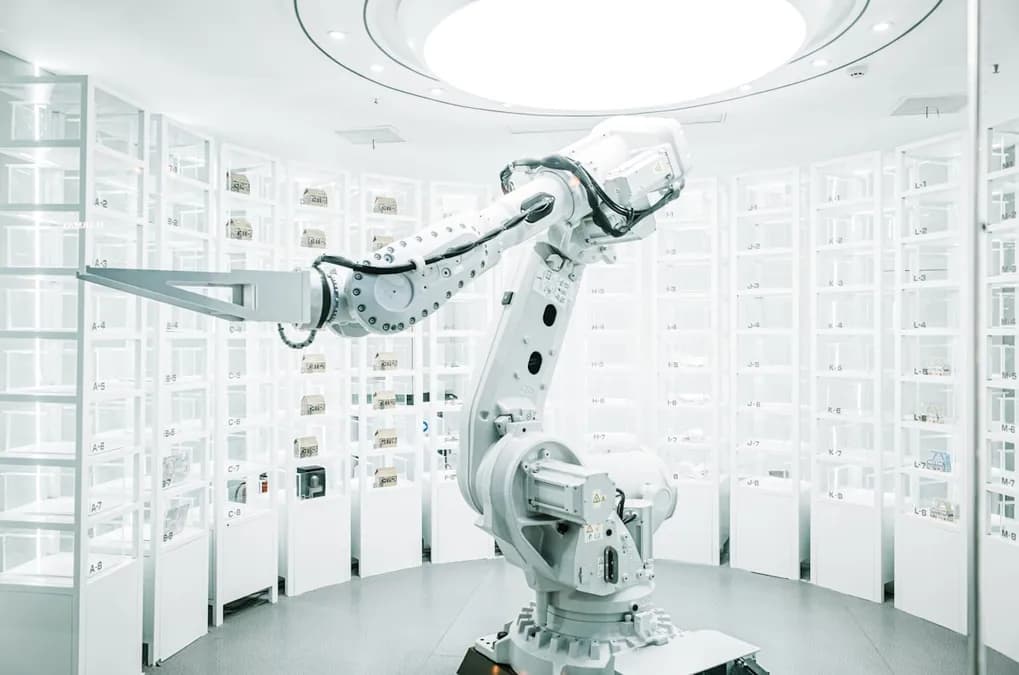
Google DeepMind unveils Gemini Robotics On-Device, a major breakthrough in embedded robotic AI, offering versatile dexterity and rapid adaptation to local tasks. This innovation promises to accelerate robots' autonomy and efficiency without relying on the cloud.
A More Agile and Versatile Embedded Robotic AI
Google DeepMind launches Gemini Robotics On-Device, an artificial intelligence model specifically designed to operate directly on local robotic devices without requiring a constant cloud connection. This new solution offers high energy and computational efficiency while providing general dexterity capable of performing a variety of tasks with rapid adaptability.
The main novelty lies in the model's ability to adapt in real time to the specific constraints and environments of embedded robots, marking a turning point compared to traditional approaches that largely rely on remote processing, often costly in latency and bandwidth.
What This Changes for Practical Robotics
Gemini Robotics On-Device significantly enhances autonomous robots' capabilities to interact with varied environments, thanks to versatile dexterity. For example, an equipped robot can now perform complex manipulations, adjust its gestures according to encountered objects, and quickly learn new tasks without undergoing a lengthy and centralized training phase.
This flexibility notably enables deployments in sectors where latency and confidentiality are critical, such as industrial manufacturing, on-site logistics, or service robotics in urban environments. The model's rapid adaptability is an undeniable advantage over previous systems, often constrained by slow and centralized updates.
Compared to cloud-first solutions, Gemini Robotics On-Device reduces dependence on a stable internet connection, opening the door to applications in isolated areas or with network constraints. This increased autonomy could transform the use of robots in professional and domestic environments.
Technical Architecture and Underlying Innovations
The Gemini Robotics On-Device model combines an architecture optimized for embedded computing with efficient transfer learning, enabling rapid adaptation without requiring full training. The key innovation is its integrated fine-tuning algorithm, which adjusts model parameters based on local sensory feedback without resorting to the cloud.
This architecture relies on advanced neural network compression and intelligent memory resource management, allowing complex models to run on embedded processors with limited capabilities. The system also benefits from advances in cognitive robotics, integrating perception and planning into a unified and local process.
According to Google DeepMind, this approach drastically reduces the latency time between the robot's perception and action, a crucial element for responsiveness in dynamic environments.
Accessibility and Targeted Use Cases
Gemini Robotics On-Device is intended for robot manufacturers and system integrators wishing to deploy autonomous solutions in contexts where latency or data security are major concerns. Access to the model is provided via a dedicated API offered by DeepMind, with customization options according to users' specific needs.
Pricing and integration terms have not yet been detailed, information not confirmed at this stage. Nevertheless, the stated goal is to democratize embedded AI for fields as diverse as logistics, industrial maintenance, domestic robotics, or medical assistance.
Expected Impact on the Intelligent Robotics Market
This innovation positions Google DeepMind as a leader in the emerging segment of embedded AI for robotics, a market still largely dominated by cloud or semi-cloud solutions. By offering a model capable of operating locally with great versatility, DeepMind meets strong demand from industrial players and startups struggling to reconcile performance and autonomy.
Faced with this advance, other players will need to accelerate their efforts to offer comparable embedded models, especially in Europe where digital sovereignty has become a priority issue. Gemini Robotics On-Device could thus accelerate an industrial dynamic around local robotics, with benefits in terms of competitiveness and innovation.
Critical Analysis and Perspectives
The promise of local and adaptable robotic AI is appealing, but its technical limits remain to be evaluated in real conditions. The model's robustness in very varied environments and long-term energy consumption management are points that deserve particular attention.
Moreover, integration into existing robots could require specific hardware adaptations, a potential barrier to rapid adoption. Finally, the question of costs and scalability remains open, information not confirmed at this stage. Nevertheless, DeepMind's approach marks a clear turning point toward more autonomous robotics, less dependent on the cloud, which is a strategic issue for the next generation of intelligent systems.
According to DeepMind, Gemini Robotics On-Device promises to transform how robots learn and adapt, paving the way for safer, faster, and more energy-efficient applications—a major breakthrough for the robotics of tomorrow.
Historical Context and Evolution of Embedded AI in Robotics
For several years, robotics has undergone a gradual transition toward architectures increasingly integrating artificial intelligence. The first AI models applied to robotics mainly depended on centralized cloud processing, thus limiting robots' responsiveness and flexibility. This dependence posed significant constraints, especially in environments where network connections are unstable or nonexistent.
The emergence of embedded AI models, like Gemini Robotics On-Device, fits within this dynamic of robot empowerment. It meets a dual requirement: improving robots' decision-making speed while ensuring the security and confidentiality of data processed locally. This paradigm shift constitutes a major step in the history of intelligent robotics, bringing robots' performance closer to that of human systems in terms of adaptability and responsiveness.
Tactical and Operational Challenges for Users
On a tactical level, deploying Gemini Robotics On-Device allows users to benefit from local intelligence that continuously adapts to environmental variations and interactions with objects. This means robots can modify their behavior in real time, for example adjusting grip strength based on an object's fragility or recalibrating their trajectories to avoid unexpected obstacles.
This rapid adaptation capability reduces the need for frequent human interventions, thus optimizing operations and increasing productivity. It also offers better resilience to field hazards, which is particularly valuable in sectors like logistics or industrial maintenance, where working conditions can be very variable.
Evolution Perspectives and Integration into Industrial Ecosystems
In the medium term, integrating Gemini Robotics On-Device into industrial ecosystems could foster the rise of autonomous robots capable of cooperating effectively with humans and other machines. This synergy relies on robots' ability to learn locally while securely communicating with central systems for updates or more in-depth analyses.
This hybridization of local and centralized approaches opens the way to innovative use cases, such as mobile robots performing maintenance interventions autonomously or robotic assistants able to adjust their actions based on users' preferences and specific needs. These perspectives herald a profound transformation of industrial and domestic practices, with a significant impact on competitiveness and quality of services offered.
In Summary
Google DeepMind's Gemini Robotics On-Device represents a major advance in embedded AI for robotics, combining versatility, rapid adaptability, and autonomy. This innovation addresses growing needs for responsiveness, confidentiality, and energy efficiency across various sectors. Despite still open questions about large-scale deployment, this model clearly illustrates the trend toward smarter, cloud-independent robotics, which could sustainably transform many industrial and domestic fields.