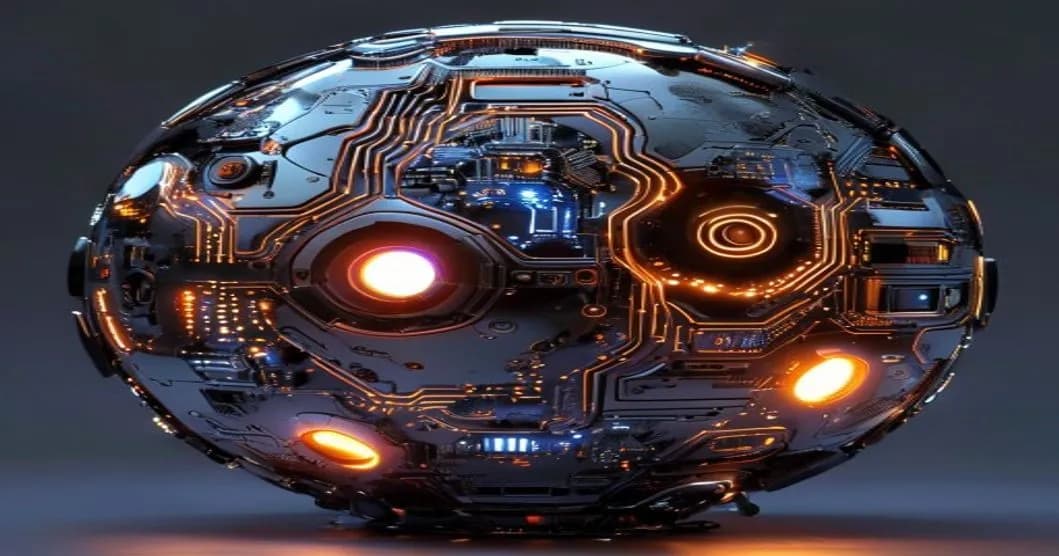
The Cyborg Laboratory: A Reflection on Augmented Humanity
In an innovative laboratory, researchers explore the integration of technology into the human body, transforming limitations into possibilities. Discover how this radical approach could redefine our perception of what it means to be human.
Technological Advancements of the Cyborg Laboratory
Technological Advancements of the Cyborg Laboratory
This pioneering laboratory explores the frontiers of augmented humanity, combining robotic prosthetics and cutting-edge technologies to create hybrid bodies. The goal is to push the limits of medicine and technology, offering a new perspective on what it means to be human.
How does this work concretely?
Researchers develop prostheses integrated into the human body, equipped with sensors and miniature motors. These connected devices enhance physical capabilities while minimizing limitations. For example, a robotic heart prosthesis can operate without interruption, while intuitive user interfaces allow for natural integration with the body.
The laboratory uses innovative technologies to create prostheses that are not just replacements but true extensions of the body. These prostheses integrate sensors that send real-time information to the nervous system, enabling better adaptation and control. The miniature motors are designed to work efficiently and quietly, minimizing disturbances for the user.
A concrete example is the robotic heart prosthesis that operates without interruption. This technology could be a revolutionary solution for patients suffering from cardiac disorders. It not only replaces the heart's function but can also adapt in real-time to the body's needs, adjusting its rhythm and arterial pressure to maintain optimal physiological balance.
User interfaces are designed to be intuitive, allowing for natural integration with the body. This includes haptic interfaces that convey sensations to the patient, enabling them to feel the texture and resistance of what they touch through the prosthesis. This improves not only functionality but also the user's subjective experience, making them feel more connected to their hybrid body.
Who is concerned by this innovation?
This technology opens new avenues for people with reduced mobility, recovering patients, and even healthy individuals looking to enhance their physical capabilities. Developers and health technology companies are already engaged in pilot projects, promising a future where humanity and technology are inseparable.
People with reduced mobility can benefit from robotic prostheses that restore their freedom of movement. For example, a robotically integrated leg that connects directly to the nervous system would not only allow walking but also enable control of the prosthesis through thought. This would be life-changing for those who have lost a limb or suffer from limited mobility.
Recovering patients, such as those who have undergone bone marrow transplants or heart surgery, could also benefit from these technologies. Temporary or permanent prostheses could support bodily functions during recovery or in the long term, offering a safer and more effective solution than traditional treatments.
Even healthy individuals may wish to enhance their physical capabilities. Prostheses that increase strength or endurance could be used by athletes or professionals exposed to physically demanding conditions. This raises ethical questions, however, about the use of these technologies to create unfair advantages in sports or professional fields.
Concrete implications for the sector
The advancements from the cyborg laboratory have profound repercussions in the fields of health, medicine, and robotics. The innovations developed here could be integrated into practical applications, transforming the technological and medical landscape radically.
Regenerative medicine is one of the areas that could be transformed by these technologies. Instead of limiting itself to replacing or repairing damaged parts of the body, regenerative medicine could use robotic prostheses to restore complete bodily functions. This includes not only the heart and limbs but also other organs like the lungs or kidneys.
Brain-machine interfaces (BMIs) are another area that could benefit from these advancements. Current BMIs are already used to allow paralyzed individuals to control robots or prosthetics with their mind. The technologies developed in this laboratory could improve the precision and fluidity of these interfaces, making prostheses more natural and intuitive.
Prospects: where does this lead?
Long-term, this approach could lead to a society where augmented humanity is the norm. Researchers continue to refine their technologies, striving to eliminate flaws and improve the user experience. The future promises even more spectacular advancements, with applications in fields such as rehabilitation, regenerative medicine, and brain-machine interfaces.
The laboratory also explores technologies that could restore or even enhance cognitive functions. Prostheses integrated into the brain could enhance memory, improve information processing, or even protect against neurological disruptions. This raises, however, complex ethical questions about the nature of humanity and the limits of technology.
Innovations developed in this laboratory could also have military or security applications. Soldiers equipped with advanced robotic prostheses could have physical capabilities superior to those of natural humans, completely changing the way conflicts are engaged.
Ultimately, the cyborg laboratory represents a significant milestone in the evolution of technology and medicine. Its advancements have the potential to transform human life radically, offering innovative solutions for the most complex medical challenges and opening new avenues for augmented humanity. As researchers continue to push forward with their work, it is essential to consider not only technological possibilities but also the ethical and social implications of these innovations.