OpenAI Unveils gpt-oss, Its Optimized and High-Performance Open Source Language Models
OpenAI launches gpt-oss-120b and gpt-oss-20b, two open-weight language models offering an unprecedented performance/cost ratio. Available under the Apache 2.0 license, they promise advanced use on consumer-grade hardware.
The landscape of conversational artificial intelligence is undergoing a major evolution today with the arrival of open-weight language models. Until now, most large-scale models developed by industry leaders remained proprietary, limiting their deployment and adaptation by the scientific and industrial communities. This situation also created a strong dependence on costly and often centralized infrastructures.
In this context, OpenAI, a key player in the field, has decided to take an important step by announcing the release of two open source models, gpt-oss-120b and gpt-oss-20b. This initiative aims to democratize access to advanced artificial intelligences while maintaining high standards of performance and efficiency.
This announcement comes at a time when European and French stakeholders are seeking to strengthen their technological autonomy in the face of American and Asian giants. Offering powerful, accessible models adapted to local constraints is a strategic challenge for companies, researchers, and public authorities.
Facts
OpenAI is therefore making available two next-generation language models, gpt-oss-120b and gpt-oss-20b, under the Apache 2.0 license, a permissive license widely used in the open source world. This allows significant usage flexibility, ranging from academic research to commercial applications.
These models stand out due to their respective sizes — 120 billion and 20 billion parameters — and their superior performance compared to other open source models of similar size. They particularly excel in reasoning tasks, which remains a major challenge for current artificial intelligence.
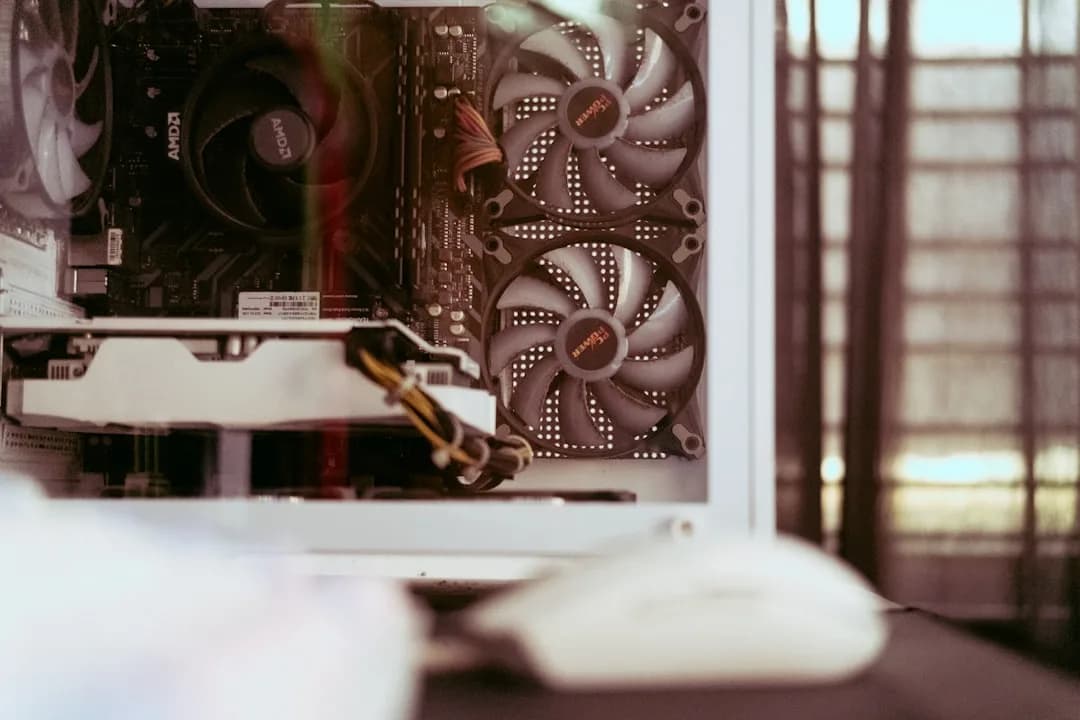
Moreover, OpenAI has optimized these models for efficient use on consumer hardware, representing a significant advance. This optimization aims to reduce infrastructure costs while maintaining high speed and execution quality, making these solutions accessible to a much wider audience than before.
A Major Technical Advance for Deployment and Integration
The capabilities of these models go beyond simple language processing. They incorporate advanced tool-use functionalities, opening the way to complex interactivity scenarios that combine artificial intelligence with manipulation of third-party applications. This innovative approach significantly enhances the versatility of systems based on these models.
Furthermore, their open format allows developers and researchers to modify, adapt, and improve these models according to their specific needs. This transparency fosters a collaborative dynamic and accelerates innovation in the field, especially in Europe where initiatives for a sovereign technological ecosystem are increasingly supported.
These models are also designed to be deployed on varied infrastructures, from the cloud to individual devices, which is a key asset in a context where personal data protection and latency are crucial criteria. This meets the expectations of companies and end users who want to keep control over their data and digital tools.
Analysis and Challenges
The release of gpt-oss-120b and gpt-oss-20b marks a turning point in the artificial intelligence industry. By making high-performance open source models accessible, OpenAI changes the competitive dynamics, notably against heavyweights like Meta, Google, or Anthropic, which also offer proprietary or semi-open solutions.
For France and Europe, this initiative is an important lever to reduce the technological divide. It allows local actors to rely on a robust base, thus avoiding starting from scratch or depending exclusively on opaque foreign solutions. This technical autonomy is essential for developing innovative applications in sensitive sectors such as healthcare, finance, or public administration.
Finally, the optimization for consumer hardware is a direct response to economic and ecological challenges. Reducing energy consumption and infrastructure costs makes it possible to envision a massive and sustainable deployment of AI, compatible with responsible digital transition goals.
Reactions and Perspectives
The scientific and technical community has welcomed this announcement with marked interest, emphasizing the importance of such an initiative to stimulate research and promote open innovation. French and European developers see in these models an opportunity to create solutions adapted to local specificities, notably linguistic and regulatory.
From the business side, this openness offers a tremendous playground for experimentation and customization, facilitating the integration of artificial intelligence into business processes without prohibitive costs. This could accelerate digital transformation in sectors still little automated.
In the medium term, it is likely that this initiative will pave the way for a new wave of collaboration between public and private actors to strengthen digital sovereignty and encourage more open and ethical standards in the AI field.
In Summary
OpenAI takes a decisive step by offering gpt-oss-120b and gpt-oss-20b, language models that are powerful, open, and optimized for broad use. Their availability under the Apache 2.0 license facilitates rapid and diverse adoption, from research to industry.
This advance fits into a context where technological mastery and reducing access barriers are crucial, especially in France and Europe. It provides a solid foundation to develop innovative and responsible applications while preparing the ground for a new era of more accessible and collaborative artificial intelligence.